
How Much Should a Builder Spend on Advertising?
Most builders know they need to invest in marketing, but how much is enough to actually make a difference? Spending too little can be just as costly as spending too much, especially when you're trying to stand out and bring in new clients.

There's a High Cost of Spending Too Little
Another year is winding down, and if you're running a construction, manufacturing, materials supplier or engineering firm, you're probably starting to think about next year's budget.
You may be crunching numbers to plan out the payroll. Equipment. Materials. Insurance. Trucks. All the stuff that keeps the doors open and the wheels turning. And then, somewhere down toward the bottom of that spreadsheet, is this mysterious little line item called marketing.
It’s always a head scratcher of what you should allocate to marketing. From a comfortable $500 a month to a nauseating $10,000. Or maybe, as usually you just keep the line item blank and allocate it to more vital priorities.
Throughout my career I’ve seen this same struggle play out countless times. As a builder you know you should be doing something more to attract new business, but it's always tough to know exactly how much you should invest, what kinds of returns to expect, and how long you’re supposed to budget for before pulling the plug if it's not working.
So, to help you get a little clearer of how you should approach budgeting for next year, let’s throw some hypothetical numbers out to get your wheels spinning.
*Keep in mind these are purely hypothetical numbers and don't guarantee results
The $500,000 Contractor
Imagine you own a construction company generating about $500,000 a year in revenue. You've got a couple of employees, a few dependable subcontractors, and a decent reputation for doing good work.
Business has been reasonably steady, with most of your work coming through referrals, repeat customers and word of mouth. But it's always feast or famine with very little control over when the phone will ring.
Let's say four of your projects each year are nice, fat $100,000 jobs. Those are the projects you love. They're more efficient, you've developed a good process for managing them, and they tend to be the most profitable.
The remaining $100,000 comes from a bunch of smaller jobs scattered throughout the year. Somehow, those little $10,000 projects always seem to consume just as much time and create twice the headaches.
You imagine what your company would look like if you could land a few more of those larger projects. Maybe you could push toward $1 million in annual revenue. You'd have more flexibility to turn down the little jobs that drive you crazy, keep your crews working on the projects they're best suited for, and protect your margins. You might even start taking a few weekends off.
So you decide it's time to get serious about devoting a little bit of your hard-earned revenue towards marketing.
The $500 Experiment
Your goal is to grow from $500,000 to $1 million. That's an additional $500,000 in annual revenue. To get things rolling, you commit $500 a month to Google Ads, or $6,000 a year.*
That feels reasonable. Enough to say you're doing something, but not enough to really hurt if the experiment goes sideways.
Unfortunately, that $6,000 represents just 1.2% of the additional revenue you're trying to generate. You're asking a pretty small investment to make a dramatic change in the trajectory of your business.
When you advertise on Google, you're competing for searches like "remodeling contractor near me." Depending on your market and competition, let's hypothetically say you're paying $50 every time somebody clicks your ad.
Your entire $500 monthly budget just bought you ten website visitors. Not ten leads, and certainly not ten customers.
Some will look around for 30 seconds and disappear. Somebody might decide your projects look too expensive. Another gets distracted by a text message and forgets what they were doing. Maybe somebody was just looking for remodeling ideas and had no intention of hiring anybody.
So those ten visitors might turn into one inquiry. Or quite possibly none.
You burn through your $500, get no phone calls, and conclude that Google Ads is a complete waste of money. I've heard it countless times: "We tried advertising once. It didn't work. Marketing just doesn't work for our business."
Meanwhile, the contractor down the street is spending $3,000 a month. At that same hypothetical $50 per click, they're getting 60 visitors. Another company is spending $10,000 and getting 200.
Spending more certainly doesn't guarantee better results, but those companies have far more opportunities to reach prospective customers. They're also collecting more information about which searches, ads and messages are working.
Consider the traditional sales funnel. A large group of prospects discovers your company, a smaller group visits your website and evaluates your work, and an even smaller group decides to contact you. From there, you still have to qualify the opportunity, prepare a proposal and actually win the project.
People disappear throughout that process. It's perfectly normal, but it means you need enough activity at the top of the funnel to produce a reasonable number of opportunities at the bottom.
When your advertising budget is too small, you may never generate enough activity to learn what works before frustration convinces you to shut everything down.
Budgeting for Growth
If you start researching how much a construction company should spend on advertising, you'll find all sorts of recommendations based on a percentage of annual revenue.
That can be a useful benchmark, particularly for an established company that wants to maintain its position. But if you're trying to grow substantially, I encourage you to consider another approach: calculate your growth marketing investment as a percentage of the additional revenue you're trying to generate.
Let's return to our hypothetical contractor. You're currently generating $500,000 a year and want to reach $1 million. That's $500,000 in targeted growth.
Here's how I would look at the different investment levels.
1–4%: Maintaining a Presence
$5,000–$20,000 annually | $420–$1,670 monthly*
At this level, you're putting some money behind marketing, which is certainly better than doing nothing. You might run a modest advertising campaign, keep your website updated or produce occasional content. You're maintaining visibility and hopefully gathering some useful information.
However, in a competitive market, this level of investment probably won't generate enough activity to substantially change your company's trajectory.
5–9%: Actively Pursuing Growth
$25,000–$45,000 annually | $2,100–$3,750 monthly*
Now you're making a more meaningful commitment. You've got enough budget to create more consistent exposure, test different approaches and begin identifying what produces legitimate opportunities.
Let's imagine that after your campaign gets established, it generates one or two qualified inquiries each month. Over a year, that's 12 to 24 inquiries. Maybe one turns into a $100,000 project.
You've invested $25,000 and generated $100,000 in project revenue. That's four dollars in revenue for every dollar invested in marketing. Of course, revenue isn't profit. You've still got labor, materials, overhead and all the other wonderful expenses that come with running a construction company.
But you can see how the math might work. And that's from just one additional project.
10–14%: Serious Attraction Mode
$50,000–$70,000 annually | $4,200–$5,830 monthly*
Whoa doggies. Now we're getting into some serious money.
At this level, you're making a substantial commitment to changing the trajectory of your company. You have enough budget to start doing several things at once.
Maybe you're running Google Ads while improving your website and building organic search visibility. That's especially important as AI changes the way people discover and research businesses. Helpful, credible content on your website gives both traditional search engines and AI-powered platforms more information to work with.
You can also dedicate resources to video, LinkedIn, case studies and email marketing that keeps you in front of prospects who aren't ready to buy today.
With enough activity across multiple channels, marketing begins functioning as a coordinated business development system. You can test ideas, measure performance and put more resources behind the approaches that produce results.
15–19%: Aggressive Expansion
$75,000–$95,000 annually | $6,250–$7,920 monthly*
At this level, you've made a deliberate decision to pursue significant growth. Maybe you're opening another location, entering a new geographic market, launching a product line or trying to take market share from a competitor.
Or perhaps you've found a marketing approach that's performing well and you're ready to pour some serious fuel on the fire.
This can be a powerful position, provided you've got the financial resources, operational capacity and discipline to manage the additional activity.
20% and Beyond: Market Domination
$100,000+ annually | $8,330+ monthly*
Look out. This ain't for the faint of heart.
You've got your eyes set on dominating your market, and you're willing to make a substantial investment to get there.
At this level, tracking performance becomes especially important. A larger budget gives you more opportunities to reach customers, but it also gives you more opportunities to waste money if your strategy isn't sound.
Bad marketing with a bigger budget just helps you lose money faster.
These percentages aren't official industry standards or guarantees of results. They're a framework I use to help business owners think about the relationship between their growth ambitions and the investment required to pursue them. Your margins, cash flow, sales cycle, competition and capacity all have to factor into the decision.
*Keep in mind these are purely hypothetical numbers. Results depend on a variety of factors and don't guarantee results.
So What Should You Budget for Next Year?
After all that, I'm going to give you the most frustrating answer in the world.
It depends.
If you've got a healthy backlog, plenty of repeat customers and no real desire to grow, a modest investment might be sufficient to maintain your visibility and protect your position.
If you're trying to add another million dollars in annual revenue, enter a new market or change the kind of projects you're winning, that's going to require a different level of commitment.
And whatever you decide to spend, give your marketing enough time to develop. A few weeks of advertising rarely tells you much, especially when you're selling expensive products or services with long sales cycles. You need time to gather information, refine your targeting, improve your messaging and let the program gain momentum.
I've watched plenty of companies in the building industry spend years trying to keep their marketing budgets as close to zero as possible. I understand why. Running a construction company is expensive, and there's always something that breaks, somebody who needs to get paid or a project that doesn't go quite the way you expected.
But while you're waiting for the phone to ring, somebody else is building a better website, launching advertising campaigns, improving their search visibility and getting in front of the customers you wish you had.
The greatest benefit of investing in a good marketing program is having enough opportunities coming your way that you can become more selective about the work you take. You can protect your margins, keep your crews busy with better projects, develop relationships with better customers and maybe even stop worrying quite so much about where the next job is coming from.
That's a pretty good return on investment.

Written by Rusty George. No AI was harmed in the writing of this article. Mostly because I'm too cheap to pay for it.
Rusty George leads a branding, website design and marketing agency serving construction companies, developers, subcontractors, manufacturers, material fabricators and suppliers. Reach out anytime to talk to a team who's just as tight with a dollar as you are. We just happen to know which dollars are worth letting go of.
MORE Insights
Unlock the secrets to transforming your construction company into a marketing powerhouse with Louder Builder.

Your Online Visibility Machine
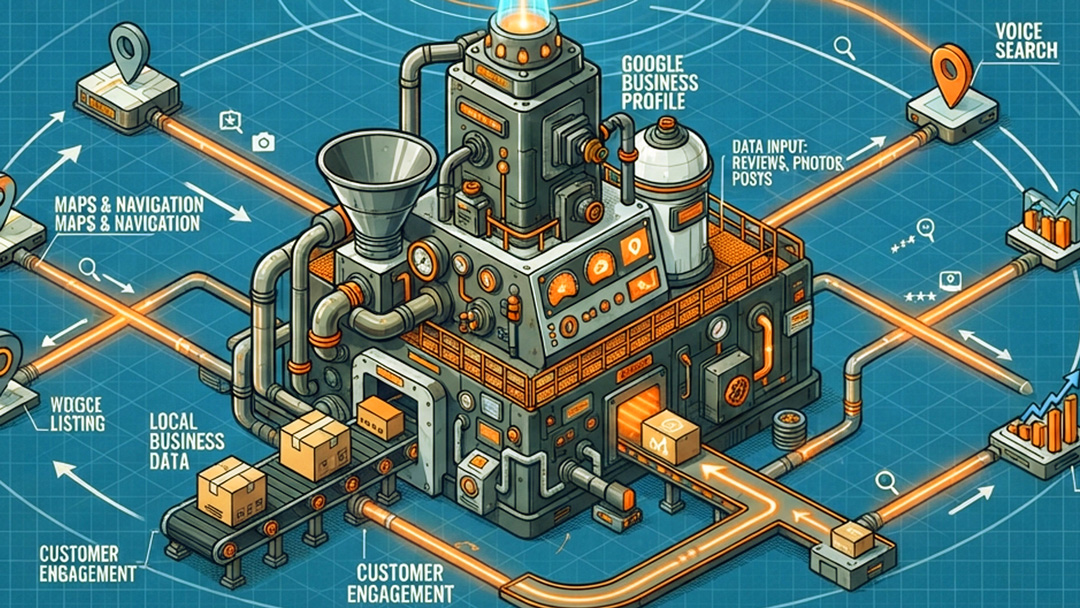
The Google Business Profile
SIGN UP FOR UPDATES
We will send you our latest insights from Louder Builder as they are released.
CONTACT US
Are you ready to begin your project today? Just have a few questions?
Either way, let’s talk.